Why I am Betting Against Claude for Enterprise in 2027 (Hot Take + Evidence)
I use Claude every day. Claude Code is my primary development tool. I built a job classifier with Claude Haiku that processes hundreds of job listings...
I use Claude every day. Claude Code is my primary development tool. I built a job classifier with Claude Haiku that processes hundreds of job listings daily for my Grizzly Peak Software job board. I wrote substantial portions of my technical book with Claude as a writing partner. When Anthropic ships a new model, I'm one of the first people testing it.
And I'm telling you: Claude is going to lose the enterprise market.
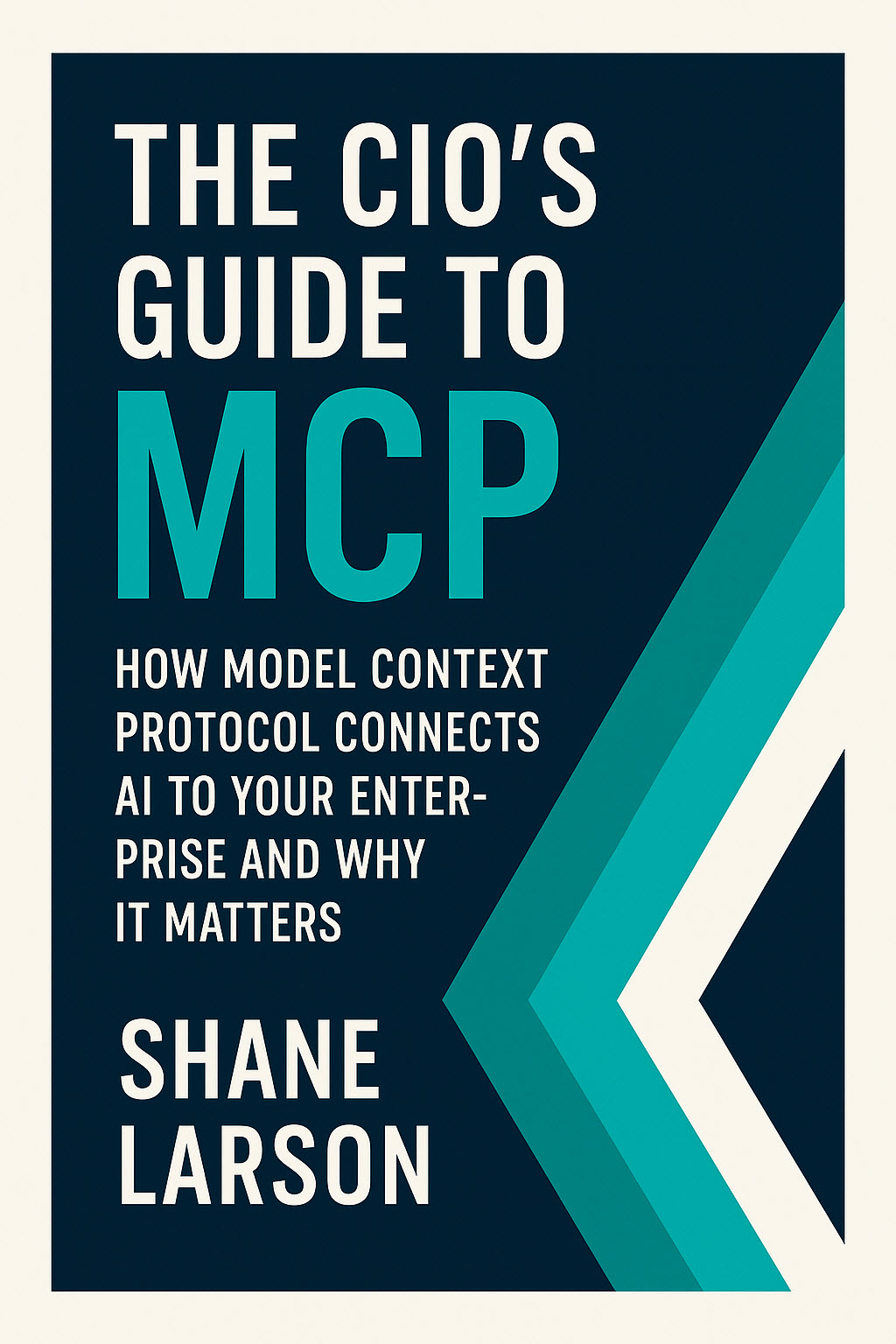
The CIOs Guide to MCP: How Model Context Protocol Connects AI to Your Enterprise and Why It Matters
Stop building custom AI integrations. MCP is the universal standard adopted by Anthropic, OpenAI, Google, Microsoft. CIO guide to enterprise adoption.
Learn MoreNot because the model is worse. It's not — Claude is arguably the best reasoning model available right now for complex technical tasks. But enterprise sales aren't won by having the best model. They're won by having the best integration story, the most familiar procurement process, and the fewest reasons for a CISO to say no.
Microsoft has all of those things. Anthropic has none of them.
Let me explain why this matters and why it's going to play out faster than most people expect.
The Integration Gap Is a Chasm
Here's the thing about enterprise software that people outside of enterprise environments don't understand: nobody buys tools in isolation. Every piece of software a large company adopts has to fit into an existing ecosystem of identity management, compliance frameworks, audit systems, and procurement workflows.
Microsoft's ecosystem advantage isn't just big. It's structural.
Consider what a Fortune 500 company already has from Microsoft:
- Azure Active Directory (now Entra ID) for identity and SSO
- Microsoft 365 for email, documents, and collaboration
- Azure for cloud infrastructure
- GitHub for source code (Microsoft owns GitHub)
- Teams for communication
- Intune for device management
- Defender for security
- Purview for compliance and data governance
When that company evaluates GitHub Copilot, the integration story is seamless. Copilot authenticates through their existing identity provider. Usage data flows into their existing audit logs. Content policies are managed through their existing compliance tools. Billing goes through their existing Microsoft enterprise agreement.
When that same company evaluates Claude? They're starting from scratch on every single one of those dimensions.
I've been in enterprise environments for most of my 30-year career. I've watched excellent products die because the integration burden was too high. I've watched mediocre products win because they plugged into what was already there. This pattern is relentless and it almost never favors the independent challenger.
The SSO Problem Is Bigger Than You Think
Single Sign-On sounds like a checkbox feature. For enterprises, it's a dealbreaker.
Large companies don't let employees create accounts with username and password on third-party services. Everything goes through their identity provider — typically Azure AD, Okta, or Ping Identity. If your product doesn't support SAML or OIDC federation with their specific IdP, you don't get in the door.
Anthropic has added SSO support to Claude for Teams and Claude for Enterprise. But SSO isn't a feature you ship once and move on. It's an ongoing integration surface that requires:
- Support for every major IdP's quirks and configuration requirements
- SCIM provisioning for automated user lifecycle management
- Conditional access policy support (MFA requirements, device compliance, location-based access)
- Integration with privileged access management systems
- Just-in-time provisioning with proper group mapping
Microsoft doesn't just support these things for Copilot — Microsoft invented several of them. Azure AD is the identity provider for most Fortune 500 companies. Copilot's SSO isn't an integration; it's a native capability.
Anthropic is playing on Microsoft's home field, and the field was literally built by Microsoft.
Compliance Is Where Dreams Go to Die
Let's talk about the compliance landscape, because this is where I think Anthropic's enterprise ambitions face the steepest climb.
Enterprise AI adoption in 2026 and 2027 isn't just about "does the model work well?" It's about:
Data Residency
Where does the data go? For companies subject to GDPR, CCPA, or industry-specific regulations like HIPAA, the answer matters enormously. Microsoft can offer data residency guarantees across 60+ Azure regions worldwide. They have sovereign cloud deployments for government customers. They have contractual frameworks that have been negotiated with regulators across dozens of jurisdictions.
Anthropic's data residency story is improving, but it's years behind. Running Claude on AWS (which Anthropic does through their Amazon Bedrock partnership) helps, but it adds a layer of indirection that makes compliance officers nervous.
Audit Trails
Every prompt, every response, every piece of data that flows through an AI system — enterprises need to log, retain, and potentially produce all of it for regulatory review. Microsoft has decades of experience building enterprise audit infrastructure. Azure Monitor, Microsoft Sentinel, Purview — these are mature, battle-tested systems that compliance teams already know how to operate.
Anthropic's audit capabilities are functional but nascent. Building enterprise-grade audit infrastructure is a multi-year effort that requires not just engineering talent but deep domain expertise in regulatory requirements across industries and jurisdictions.
Content Safety and Policy Enforcement
Enterprises need granular control over what AI can and can't do. Not just "is this model safe?" but "can we prevent employees in the legal department from using AI for contract generation while allowing the marketing team to use it for content creation?" Content policies need to be configurable per department, per role, per use case.
Microsoft's Azure AI Content Safety service integrates directly with Copilot and allows this kind of granular policy management. It ties into their existing role-based access control infrastructure. The whole thing feels like one system because it is one system.
Claude's safety features are excellent at the model level — arguably better than GPT-4's. But enterprise content policy isn't about model-level safety. It's about organizational control, and that requires infrastructure that Anthropic is still building.
The Procurement Problem
Here's a detail that engineers consistently underestimate: procurement.
Getting a new vendor approved at a Fortune 500 company is a 3-6 month process involving:
- Security review — Your SOC 2 report, penetration test results, data processing agreements, insurance certificates
- Legal review — Your terms of service, data processing addendum, liability provisions, IP indemnification
- Privacy review — Data flow mapping, sub-processor lists, cross-border transfer mechanisms
- Procurement negotiation — Volume pricing, payment terms, SLA guarantees
- Architecture review — Integration patterns, data flows, network requirements
Microsoft? Already an approved vendor. Already has a master services agreement in place. Already passed security review. Already has negotiated pricing through the enterprise agreement.
Adding Copilot to an existing Microsoft relationship is a line item addition. Adding Claude to an enterprise that doesn't have an Anthropic relationship is a full vendor onboarding process.
I've seen this play out dozens of times. The product that's easier to buy wins, even when the product that's harder to buy is better. It's not fair. It's not rational. It's how enterprise procurement works.
The Amazon Bedrock Play Isn't Enough
Anthropic's strongest enterprise card is the Amazon Bedrock partnership. Running Claude through AWS gives enterprises a way to use Claude within their existing AWS relationship, avoiding some (but not all) of the procurement headaches.
It's a smart move. But it has limitations.
First, it cedes the customer relationship to Amazon. When a company accesses Claude through Bedrock, their contract is with AWS, not Anthropic. Their support relationship is with AWS. Their SLA is with AWS. Anthropic becomes a component in someone else's platform, not a strategic vendor with a direct relationship.
Second, AWS is not Microsoft when it comes to enterprise desktop and productivity software. The code generation and knowledge work use cases for AI happen in environments Microsoft dominates — VS Code, Office, Teams, Outlook. AWS doesn't have a productivity suite. They don't have a code editor with 70%+ market share. They don't have the surface area to embed AI into the daily workflows of every knowledge worker.
Third, Amazon has its own models. Amazon has been investing heavily in its own foundation models. How long before Bedrock starts defaulting to Amazon's own models rather than Anthropic's? The history of platform companies favoring their own products over third-party alternatives is long and well-documented.
Where Claude Wins (And It's Not Enterprise)
I want to be clear: this isn't a "Claude is bad" article. Claude is exceptional. Here's where I think it continues to dominate:
Independent Developers and Small Teams
For people like me — indie developers, small consultancies, startups under 50 people — Claude is the best tool available. The model quality is superior for complex reasoning tasks. Claude Code is remarkably good for agentic software development. The pricing is reasonable. The API is clean and well-documented.
I built my job classification system on Claude Haiku because it was the best model for the task at the price point I needed. I use Claude Code daily because it understands my codebase better than any alternative I've tried. For my workflow, Claude is irreplaceable.
Research and Analysis
Claude's ability to process long documents, reason through complex problems, and produce nuanced analysis is genuinely best-in-class. For lawyers, researchers, analysts, and anyone doing deep knowledge work as an individual or small team, Claude is the clear choice.
Developer Tools and APIs
Anthropic's API design is excellent. The developer experience is clean, well-documented, and predictable. For companies building AI-powered products (as opposed to consuming AI as a productivity tool), Claude's API is a great foundation.
The Numbers That Matter
Let's look at this from a market perspective.
Microsoft reported that Copilot for Microsoft 365 was being used by over 70% of Fortune 500 companies as of late 2025. GitHub Copilot had over 1.8 million paying subscribers. These numbers have only grown in 2026.
Anthropic's enterprise revenue numbers aren't public, but industry estimates suggest their enterprise business (Claude for Teams and Claude for Enterprise) represents a small fraction of their total revenue, which itself is a fraction of Microsoft's AI revenue.
The gap isn't closing. It's widening. Every quarter that passes, Microsoft embeds Copilot more deeply into the enterprise stack. Every integration makes switching harder. Every compliance certification makes the security review easier. The moat isn't just deep — it's getting deeper.
What Would Change My Mind
I'm making a prediction, not stating a fact. Here's what could prove me wrong:
A major Microsoft AI failure. If Copilot has a significant security breach or produces a high-profile compliance failure, it would create an opening. Enterprises move away from vendors that burn them. This is a real risk for Microsoft — moving fast with AI integration across their entire stack creates a large attack surface.
Regulatory action. If antitrust regulators force Microsoft to decouple Copilot from the rest of the Microsoft stack, the integration advantage disappears. This is plausible — the EU in particular has shown willingness to challenge Microsoft's bundling practices.
Anthropic nails the enterprise infrastructure. If Anthropic builds (or acquires) a full enterprise platform — identity, compliance, audit, administration — and the model quality gap remains significant, they could compete on quality plus adequate infrastructure. This is a massive undertaking, but it's not impossible.
A paradigm shift. If the next generation of AI models makes the current enterprise integration stack obsolete — if AI agents that manage their own infrastructure become the norm — then the whole integration advantage could evaporate. I think this is the most likely disruption scenario, and it's the wildcard that makes any prediction past 2028 unreliable.
The Uncomfortable Truth
The uncomfortable truth about enterprise technology markets is that the best product rarely wins. The best-integrated product wins. The easiest-to-procure product wins. The product that requires the fewest organizational changes wins.
Microsoft understands this better than any company in technology. They've been playing this game for 40 years. They didn't beat Lotus 1-2-3 by building a better spreadsheet. They beat it by bundling Excel with Word and PowerPoint. They didn't beat Slack by building a better chat app. They beat it by bundling Teams with Office 365.
They're going to do the same thing with AI. Copilot won't beat Claude by being smarter. It'll beat Claude by being already there.
I love Claude. I'll keep using Claude. For my indie work, my side projects, my book writing, my job board — Claude is the best tool I've found. But when I look at where the enterprise AI market is heading in 2027, I see a story that's been told before, and it doesn't end well for the technically superior challenger.
Anthropic's best path forward might not be competing with Microsoft for enterprise seats at all. It might be doubling down on developers, researchers, and the API ecosystem — markets where product quality actually determines the winner. That's a smaller market than enterprise productivity, but it's a market Anthropic can own.
Sometimes the smartest bet isn't the biggest one.
Shane Larson is a software engineer with 30+ years of experience, running Grizzly Peak Software and AutoDetective.ai from his cabin in Alaska. He writes about AI, software architecture, and building things that work.