The Power of Free Chapters: How Giving Away Your Best Work Drives Book and SaaS Sales
I gave away the first three chapters of my book for free. People told me I was crazy.
I gave away the first three chapters of my book for free. People told me I was crazy.
"Why would anyone buy it if they can read the best parts for free?" That was the common response from people who have never actually sold a book. The people who have sold books said something different: "Only three chapters? You should give away more."
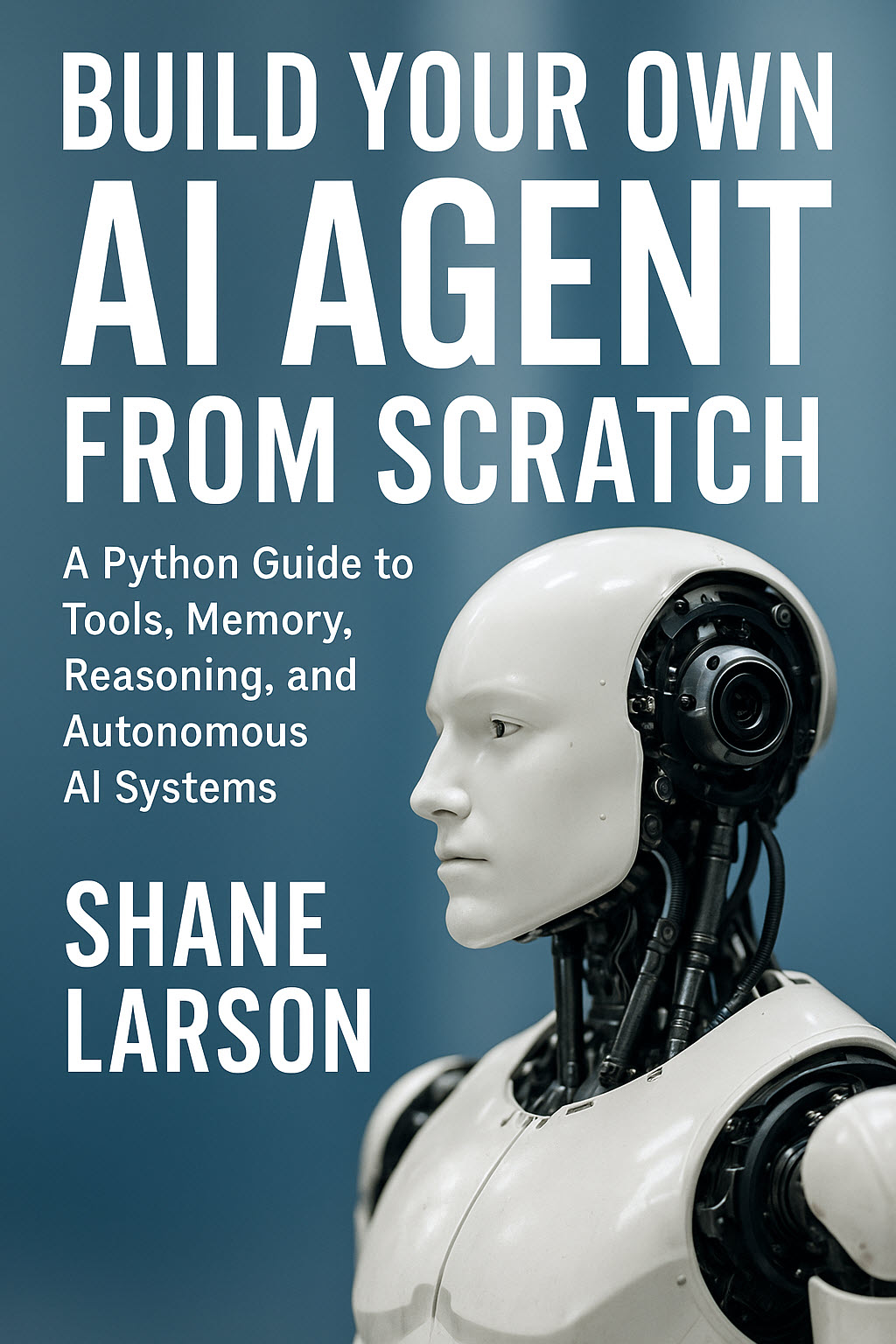
Build Your Own AI Agent From Scratch
Build a complete AI agent from scratch in Python — no frameworks, no hype. 16 chapters covering tools, memory, reasoning, MCP, multi-agent systems & more.
Learn MoreThey were right. The free chapters have been responsible for more sales than any marketing campaign, social media post, or email blast I've ever done. It's not even close. And the same principle — giving away high-value content to drive paid conversions — has been the core growth strategy for AutoDetective.ai.
Let me explain why this works, because the mechanics are counterintuitive until you see them in action.
The Psychology of the Free Chapter
When someone downloads a free chapter of a technical book, several things happen simultaneously that no amount of marketing copy can replicate:
They self-qualify. Someone who downloads three chapters about training LLMs with Python and PyTorch is interested in training LLMs with Python and PyTorch. You don't need to guess whether they're in your target audience. They just told you they are, with their behavior.
They experience your teaching style. Technical books live or die on how well the author explains complex concepts. Marketing copy can claim "clear, practical instruction." Three free chapters prove it. The reader knows within ten pages whether your explanation style clicks with how their brain processes information.
They invest time before they invest money. This is the subtle one. After someone has spent forty-five minutes reading your free chapters, they've invested attention and effort. They've started building a mental model based on your framework. Buying the rest of the book isn't a cold purchase — it's continuing an experience they've already started.
They encounter a cliffhanger. Not a manipulative one. But if your book is structured well, chapter three ends at a natural inflection point. You've laid the foundation. The reader understands the basics. They can see where you're going. And they want to get there. That's not a sales trick — it's good writing doing what good writing does.
How I Structured the Free Content
My book on training LLMs is structured in three parts. Part one covers fundamentals — what large language models are, how transformers work, the mathematics you actually need (and the mathematics you can safely ignore). Part two is practical implementation — building training pipelines, managing datasets, fine-tuning strategies. Part three is advanced topics — distributed training, evaluation, deployment.
I give away all of part one for free. Three chapters, roughly 60 pages, covering everything you need to understand before you start writing code.
This was deliberate. Part one is the most valuable section for someone who doesn't know whether they need this book. It answers their real question: "Will this book teach me things I don't already know, in a way I can actually understand?"
If the answer is yes, they buy. If the answer is no, they weren't going to buy anyway, and I've saved us both the frustration of a refund request.
The conversion rate from free chapter download to purchase? Around 12%. That's twelve out of every hundred people who download the free chapters eventually buying the full book. For a technical book with zero advertising budget, that number keeps me extremely happy.
The Distribution Strategy
Having free chapters is useless if nobody knows they exist. Here's how I distribute them:
On the website, everywhere relevant. Every article on Grizzly Peak Software that touches on AI, machine learning, or LLMs includes a mention of the free chapters. Not a popup. Not a banner ad. A contextual mention within the content: "I cover this concept in more depth in chapters 2 and 3 of my book — you can read them free here."
// Book promotion component used across article pages
function getBookPromotion(articleCategory) {
    var promos = {
        'AI': {
            text: 'Want to go deeper? The first three chapters of my book on training LLMs are free.',
            link: '/book/free-chapters',
            context: 'inline'
        },
        'Architecture': {
            text: 'The training pipeline architecture I describe in my book starts with these fundamentals.',
            link: '/book/free-chapters',
            context: 'sidebar'
        }
    };

    return promos[articleCategory] || null;
}
On social media, as the primary call to action. When I share technical content on LinkedIn or Twitter, I don't say "buy my book." I say "here are three free chapters." The difference in engagement is massive. "Buy my book" gets scrolled past. "Here are three free chapters" gets clicks, because there's no commitment, no risk, no friction.
In email sequences. When someone subscribes to the Grizzly Peak Software newsletter, the welcome email includes a link to the free chapters. Not as the main pitch — the main pitch is "here's what you'll get from this newsletter." The free chapters are positioned as a bonus. Something extra. People love getting something extra.
On the job board. This is the cross-pollination piece. Someone browsing AI and machine learning job listings on my job board might see a sidebar promotion for the free chapters. The context is perfect: "If you're looking for ML jobs, here's a resource that will sharpen your skills for the interviews."
Applying the Same Principle to SaaS
The free chapter strategy isn't just for books. The same psychology applies to software products, and I've used it aggressively with AutoDetective.ai.
AutoDetective.ai has a free tier. It's not a crippled version of the product. It's a genuinely useful tool that gives you real diagnostic information about real problems with real vehicles. The free tier answers the question "what does this warning light mean?" with actual, actionable information.
The paid tier goes deeper — historical data, maintenance schedules, repair cost estimates, mechanic finder integration. But the free tier isn't a teaser. It's the equivalent of those first three chapters. It proves the value before asking for money.
The parallel is almost exact:
| Book | SaaS |
|---|---|
| Free chapters | Free tier |
| Self-qualifies buyers | Self-qualifies subscribers |
| Demonstrates teaching style | Demonstrates product quality |
| Creates time investment | Creates workflow investment |
| Natural upgrade point | Natural upgrade point |
The conversion rate from free tier to paid on AutoDetective.ai is lower than the book — around 4%. But the lifetime value of a SaaS subscriber is much higher than a one-time book purchase, so the math works out.
What to Give Away and What to Keep
This is where most people get it wrong. They either give away too little (a single chapter, a 7-day trial with usage limits that make the product useless) or they give away too much (the entire book, unlimited free tier with no reason to upgrade).
The principle I use: give away everything someone needs to make an informed decision, but not everything they need to complete the journey.
For the book, the first three chapters give you a complete understanding of the fundamentals. You could stop reading after chapter three and know more about LLMs than most people. But you can't actually build anything yet. That requires part two. The free chapters satisfy curiosity while creating capability gaps that only the full book fills.
For AutoDetective.ai, the free tier tells you what's wrong with your car. That's genuinely useful and you could stop there. But it doesn't tell you how much it'll cost to fix, which mechanics near you can do the work, or what the repair history looks like for your specific vehicle and model year. The free tier satisfies the immediate need while surfacing deeper needs that the paid tier addresses.
// Content gating logic — what's free vs. paid
function determineAccess(contentType, userTier) {
    var accessMap = {
        'book': {
            'free': { chapters: [1, 2, 3], features: ['read', 'highlight'] },
            'paid': { chapters: 'all', features: ['read', 'highlight', 'download', 'exercises'] }
        },
        'diagnostics': {
            'free': { features: ['basic_scan', 'warning_lookup', 'single_report'] },
            'paid': { features: ['full_scan', 'history', 'cost_estimate', 'mechanic_finder', 'export'] }
        }
    };

    return accessMap[contentType][userTier];
}
The Objections I've Heard (and My Responses)
"People will just read the free chapters and never buy." Yes. Most of them will. That's fine. Those people weren't going to buy anyway. The free chapters aren't losing you sales — they're filtering out non-buyers early, before you waste time marketing to them.
"Giving away content devalues it." This is the scarcity mindset talking, and it's wrong. Nobody thinks less of a restaurant because they give out free samples. Nobody thinks less of Spotify because it has a free tier. Free content that's genuinely good increases the perceived value of the paid content, because people think "if this is what they give away for free, the paid stuff must be incredible."
"Competitors will steal your content." They might. And it won't matter. A competitor can copy your words but they can't copy your ecosystem. They can't copy the trust you've built through hundreds of articles, a job board, a newsletter, and a body of work that establishes you as a real person with real experience. Content is defensible through context, not through locks.
"You should use a paywall with a free preview instead." I tried this. The conversion rate was roughly one-third of what I get with genuinely free chapters. Paywalls create friction and resentment. Free chapters create gratitude and trust. The math isn't close.
The Email Capture Question
Every marketing person who hears "free chapters" immediately asks: "You gate them behind an email capture, right?"
I don't. And this is controversial.
My free chapters are available to anyone, no email required. You can read them on the website right now without giving me your email address, your name, or your firstborn child.
Why? Because gating free content behind email capture defeats the purpose. The whole point is reducing friction to zero. Every form field you add reduces the number of people who will actually engage with the content. And people who give you a fake email just to download something aren't valuable leads anyway — they're noise in your metrics.
Instead, I put an optional email signup at the end of the free chapters. Not a gate. An invitation. "If you found this useful, subscribe for more." The people who sign up at that point have actually read the content and want more. They're warm leads, not form-fillers.
My email list is smaller because of this approach. But the engagement rate is significantly higher. I'd rather have 500 subscribers who open every email than 5,000 who signed up to get past a gate and never engage again.
Measuring What Matters
The metrics that matter for a free chapter strategy are different from what most people track:
Download-to-purchase conversion rate. How many people who engage with free content eventually buy? For my book, it's about 12%. I track this through UTM parameters and cookies that persist across sessions.
Time spent with free content. If people download the chapters and bounce after page two, the content isn't doing its job. Average time with my free chapters is about 25 minutes, which tells me people are actually reading.
The lag between free and paid. Most of my book purchases don't happen the same day as the free chapter download. The median lag is about nine days. People download, read when they have time, think about it, then buy. If you're measuring same-session conversions, you're dramatically underestimating the effectiveness of your free content.
// Tracking the free-to-paid journey
function trackFreeContentEngagement(userId, action) {
    var events = {
        'free_chapter_view': { timestamp: new Date(), page: null },
        'free_chapter_complete': { timestamp: new Date(), timeSpent: null },
        'purchase': { timestamp: new Date(), source: 'free_chapter_funnel' }
    };

    var event = events[action];
    if (event) {
        logEvent(userId, action, event);
    }
}
Referral source of free chapter readers. Understanding where your free content readers come from tells you where to invest marketing effort. For me, the top three sources are organic search (people googling LLM training concepts), article cross-links (people reading my blog posts), and social media shares (people linking to the free chapters).
The Compounding Effect
The thing about free chapters that nobody talks about is how they compound over time.
Every person who reads the free chapters and has a positive experience becomes a potential referrer. They mention the book to colleagues. They share the free chapter link on Reddit. They recommend it in Slack channels. They include it in "resources for learning ML" blog posts written by other people.
This referral loop is self-sustaining and grows over time. I wrote those three chapters once, two years ago. They're still generating referrals today. The marginal cost of each new reader is literally zero.
Compare this to paid advertising, where every click costs money and the traffic stops the moment you stop paying. Free content is a permanent, appreciating asset. Advertising is a depreciating expense.
My book has sold more copies through the free chapter funnel than through all other channels combined. Every Amazon listing optimization, every social media campaign, every email blast — combined, they don't match the free chapters. The best marketing for a paid product is a free product that proves the paid one is worth buying.
Putting It All Together
If you're building products — books, courses, SaaS tools, anything — and you're not giving away your best work for free, you're leaving money on the table.
Not your mediocre work. Not a watered-down version. Your best work. The stuff that makes people say "if this is free, I need to see what they're charging for."
Give it away without gates, without friction, without strings. Let it do the selling for you. Track the journey from free to paid. Be patient — the lag between download and purchase is longer than you think. And trust that quality content, given away generously, is the most effective marketing strategy a solo developer can deploy.
I figured this out by accident, watching my free chapter downloads correlate with book sales over a six-month period. Now it's deliberate, it's measurable, and it's the foundation of how I approach every product launch.
The next time someone tells you not to give away your best work, ask them how their paid advertising is going. Then go give away three more chapters.
Shane Larson is a software engineer and technical author based in Caswell Lakes, Alaska. He runs Grizzly Peak Software and AutoDetective.ai, and wrote the book on training LLMs with Python and PyTorch — the first three chapters of which are, naturally, free.