The 2021 Indie Hacker Playbook Is Dead. Here's What Replaced It
Consulting dropped to 15% of my revenue. Digital products, API services, and AI-amplified SaaS filled the gap. Here's the full breakdown.

Here's my actual 2025 breakdown:
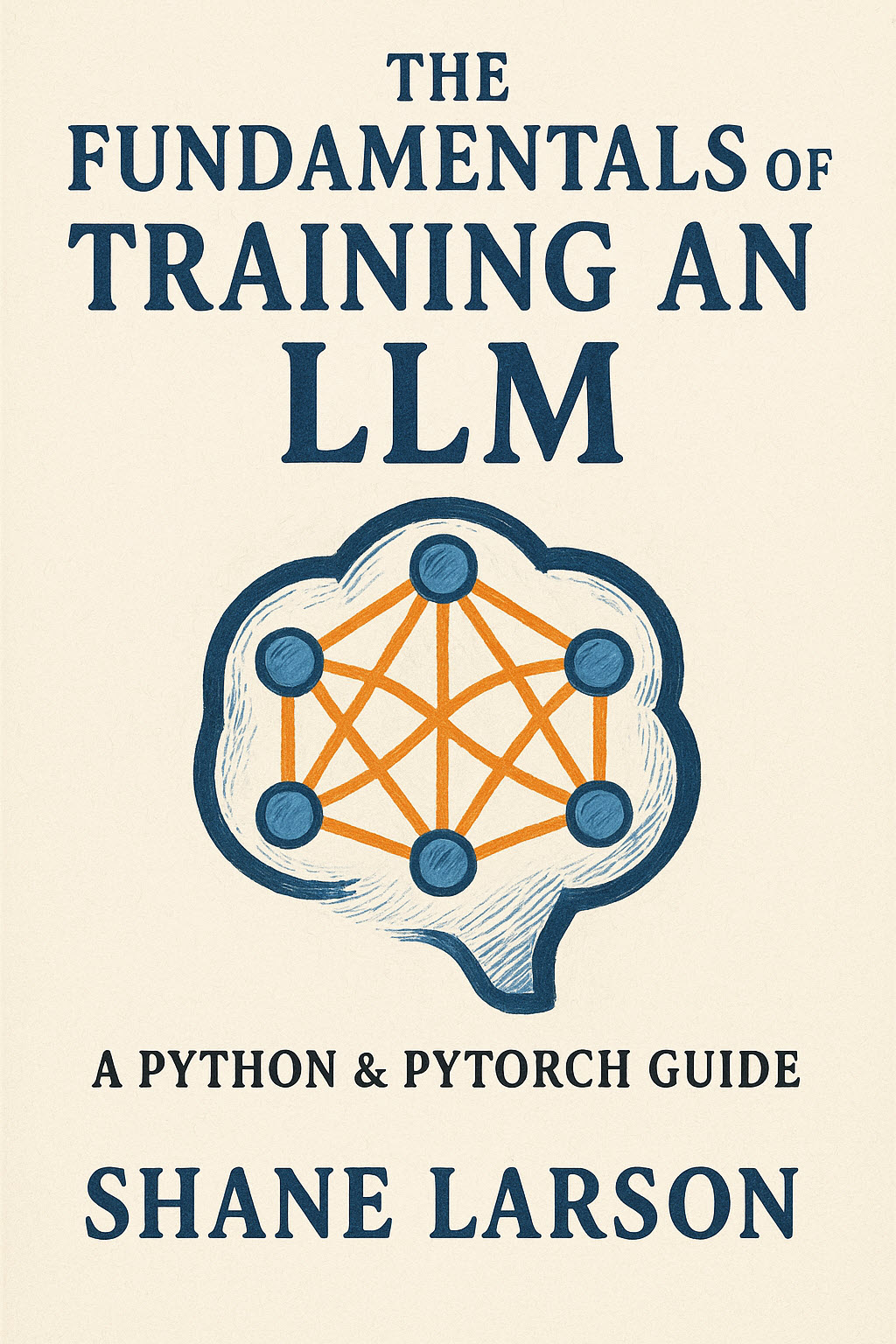
The Fundamentals of Training an LLM: A Python & PyTorch Guide
Build a GPT-style transformer from scratch in Python. Learn how LLMs actually work through hands-on code. No ML experience required.
Learn More| Source | Revenue | % of Total | |--------|---------|-----------| | Consulting/Freelance | $14,100 | 30% | | AutoDetective.ai (SaaS) | $12,500 | 27% | | Digital Products (Gumroad) | $11,800 | 25% | | API Services | $5,400 | 11% | | Other (affiliate, etc.) | $3,200 | 7% | | Total | $47,000 | 100% |
Not a fortune, but enough to pay for the cabin in Alaska, keep the woodstove fed, and fund my unhealthy addiction to server hardware. What matters isn't the number: it's that every revenue stream except consulting grew, and the ones that grew are the ones that don't trade my time for money.
The indie hacker revenue stack has fundamentally changed, and most people are still running the 2021 playbook. LLMs didn't just add a new tool to the kit. They restructured which revenue streams are worth building and which ones are dying. Let me walk through what I learned.
SaaS: The Compression Effect
The uncomfortable truth about SaaS in 2026: the bar for what constitutes a "product" has collapsed.
Two years ago, building a SaaS product that did automated code review was a six-month project requiring a team of three. Today, a motivated solo developer can build something comparable in two weeks using Claude or GPT-4 as the intelligence layer. The LLM does the hard part. You just build the wrapper.
This sounds great for indie hackers, and in some ways it is. The problem is that everyone else can do the same thing. The moat around AI-wrapper SaaS products is nonexistent. I've watched dozens of "AI-powered [thing]" products launch, get traction for three months, then die as five competitors pop up offering the same thing.
What still works in SaaS:
Domain expertise + LLM intelligence + proprietary data = defensible product
The LLM is the commodity. Your domain expertise and your data are the moat. I run AutoDetective.ai, which uses AI to analyze vehicle listings. The LLM component is table stakes: anyone can call Claude's API. What makes it work is years of understanding the used car market, a database of historical pricing data, and integration with data sources that aren't easy to replicate.
If your SaaS idea can be summarized as "ChatGPT but for [niche]," it's already dead. If it can be summarized as "I know [domain] deeply and I'm using AI to solve [specific problem] in a way that requires [proprietary advantage]," you might have something.
Freelancing: From Doing to Directing
I still take occasional consulting projects, but the nature of the work has completely changed. In 2023, clients paid me to write code. In 2026, clients pay me to direct AI agents and make architectural decisions.
A startup hired me last summer to build an API integration layer between their platform and six third-party services. In the old world, that's two months of work at $150/hour. In the new world, I spent three days architecting the system and one week supervising Claude Code as it built the implementations. Total billable time: about 60 hours.
I charged the same project rate I would have charged for two months of hands-on work. The client got the project delivered in two weeks instead of eight. I earned the same money in one-third the time. Everyone wins.
The indie hackers who are struggling with freelancing in 2026 are the ones still selling code output. The ones thriving are selling judgment, architecture, and speed. If you can deliver a project in two weeks that used to take two months, your effective hourly rate triples even if your quoted rate stays the same.
This is the part that makes some engineers uncomfortable. It feels like cheating. It's not. The client is paying for a working system delivered on time. How you build it is your business. And frankly, a system designed by an experienced architect and built by AI agents is often better than one hand-coded over two months by someone who's tired and making increasingly sloppy decisions by week six.
Digital Products: The Golden Era
This is where the real shift happened for me. Digital products (ebooks, guides, templates, code packages) used to be a grind. Writing a 100-page guide took three to four weeks. Creating supporting materials took another week. Marketing it took another week.
Now the creation process is dramatically faster. Not because AI writes the product for me: the core content still comes from my actual experience and expertise. But because AI handles the tedious parts: formatting and structuring the content, generating code samples based on my architectural descriptions, creating companion materials like checklists and quick-reference cards, proofreading, consistency checking, and producing the launch marketing package.
My digital product revenue went from $4,200 in 2024 to $11,800 in 2025. Same audience size. Same marketing channels. The difference was volume: I launched six products in 2025 versus two in 2024.
Here's my current digital product workflow:
var fs = require("fs");
var path = require("path");

function productPipeline(config) {
  var stages = {
    outline: {
      status: "manual",
      description: "Write detailed outline from your expertise"
    },
    firstDraft: {
      status: "ai-assisted",
      description: "Expand outline with AI, heavily edit"
    },
    codeSamples: {
      status: "ai-generated",
      description: "Generate code based on your specifications"
    },
    review: {
      status: "manual",
      description: "Test all code, verify all claims"
    },
    formatting: {
      status: "ai-assisted",
      description: "Format for PDF, create table of contents"
    },
    companions: {
      status: "ai-generated",
      description: "Checklists, cheat sheets, reference cards"
    },
    launch: {
      status: "ai-assisted",
      description: "Product page, emails, social posts"
    }
  };

  return stages;
}
The highest-value stages (outline, review) are fully manual. Those are where decades of experience actually matters. The outline ensures the product covers what developers actually need, not what an AI thinks they need. The review ensures every code sample works and every technical claim is accurate.
The AI-assisted and AI-generated stages are where the time savings come from. My per-product time dropped from about 120 hours to about 40 hours. At $19-29 per product, the math works out much better when you can produce three times as many products per year.
Content Monetization: The Paradox
There's more content than ever, most of it is worse than ever, and audiences are more willing to pay for quality than ever.
The blog I run on Grizzly Peak Software gets about 45,000 monthly visitors. That's respectable for a niche technical blog. I could monetize with display ads: at typical tech blog CPMs, that's maybe $300-500 per month. Instead, I use the blog as a funnel for digital products and consulting.
Every article is a proof of competence. Every article demonstrates expertise that might convince someone to buy a guide or hire me for a project. The blog makes zero direct revenue and generates probably 60% of my indirect revenue.
The LLM impact on content strategy is twofold.
First, production costs dropped. I can publish more frequently because AI handles the tedious parts of content creation: formatting, proofreading, generating code samples, creating meta descriptions for SEO. I still write every article myself, but the overhead around each article shrank by half.
Second, quality expectations increased. Readers can get generic technical content from ChatGPT. They come to my blog for opinionated, experienced, first-person perspectives they can't get from an AI. The articles that perform best are the ones where I share failures, hard-won lessons, and contrarian opinions. Those are things AI can't manufacture.
The content creators who are dying in 2026 are the ones who were always producing rewritten Stack Overflow answers. The ones thriving are the ones with genuine expertise and a distinct voice. LLMs made it easy to produce mediocre content, which made mediocre content worthless.
API Services: The Sleeper Revenue Stream
This one surprised me. I started offering a few internal tools as paid API services almost as an experiment, and they've become a meaningful revenue stream.
I built various utility APIs for my own projects: a markdown-to-PDF converter that handles technical content well, a job listing classifier, a URL metadata extractor. These are small, focused services that cost me very little to run on my existing infrastructure.
I put them behind a simple API key system and started charging per request:
var express = require("express");
var router = express.Router();

var PRICING = {
  "markdown-to-pdf": 0.02,    // $0.02 per conversion
  "classify-job": 0.005,       // $0.005 per classification
  "extract-metadata": 0.001    // $0.001 per extraction
};

router.use(function(req, res, next) {
  var apiKey = req.headers["x-api-key"];
  if (!apiKey) {
    return res.status(401).json({ error: "API key required" });
  }

  validateKeyAndCheckBalance(apiKey, function(err, account) {
    if (err) return res.status(401).json({ error: "Invalid API key" });
    if (account.balance <= 0) {
      return res.status(402).json({ error: "Insufficient balance" });
    }
    req.account = account;
    next();
  });
});

router.post("/convert/markdown-to-pdf", function(req, res) {
  var markdown = req.body.markdown;
  if (!markdown) {
    return res.status(400).json({ error: "markdown field required" });
  }

  convertMarkdownToPdf(markdown, function(err, pdfBuffer) {
    if (err) return res.status(500).json({ error: "Conversion failed" });

    chargeAccount(req.account.id, PRICING["markdown-to-pdf"]);

    res.setHeader("Content-Type", "application/pdf");
    res.send(pdfBuffer);
  });
});
This brings in about $400-600 per month. Not a lot in isolation, but it's almost entirely passive: the services run on infrastructure I'm already paying for, and the AI components use the same API keys I'm already paying for.
The key insight: in a post-LLM world, utility APIs are easier to build and harder to find. Everyone's building full applications. Very few people are building focused, reliable, well-documented API services that do one thing well. If you've built something useful for your own projects, there's a good chance other developers would pay a few cents per request to use it instead of building and hosting it themselves.
What Didn't Work
Not everything I tried in 2025 paid off. A few things failed, and they're worth mentioning because they illustrate the same patterns from a different angle.
I built two AI-wrapper tools early in the year: one that generated API documentation from codebases, and one that summarized Slack threads into action items. Both worked. Both had competitors within weeks. I shut them down after three months because the acquisition cost per user exceeded what I could charge. The lesson was the same one I outlined in the SaaS section, but I had to learn it with my own money: if the LLM is the product, you don't have a product.
I also tried selling a recorded video course. It took longer to produce than three digital products combined and earned less than any one of them. The market for mid-tier video courses has been gutted by free YouTube content on one end and AI tutors on the other. The written guides with working code performed better in every way: faster to produce, easier to update, and more aligned with how developers actually learn (by reading and running code, not watching someone talk).
I spent about two months on a programmatic content play: auto-generating comparison pages for developer tools using LLM output. The pages ranked briefly, then tanked after a Google update. I should have seen that coming. Google has gotten good at identifying thin AI-generated content, and "automatically generated comparison of X vs Y" is exactly the pattern they're targeting. The pages that survived and grew were the ones I wrote myself with actual opinions and tested code.
Building Your Stack: The Practical Advice
If you're an experienced developer thinking about building an indie revenue stack in 2026, here's what I'd tell you.
Start with digital products. They're the fastest to launch, the easiest to test, and they compound over time. Your first product will probably make $200. Your fifth will make $2,000. The expertise compounds as you learn what your audience actually wants.
Use AI to increase volume, not to replace expertise. The products and services that work are the ones grounded in real experience. Use AI to handle formatting, marketing, and grunt work. Don't use it to fake expertise you don't have.
Build API services from your own tools. If you built something useful for yourself, wrap it in an API, add key-based authentication, and charge per request. Even at $300/month, that's $3,600/year for zero additional effort.
Reduce consulting, don't eliminate it. Consulting provides two things: cash flow and market intelligence. You learn what problems companies actually have, which informs what products to build. I'll probably always keep one or two consulting clients for that reason alone.
Don't chase the AI wrapper opportunity. Building "ChatGPT for [niche]" without deep domain expertise is a race to the bottom. Build things where the AI is an implementation detail, not the value proposition.
The Uncomfortable Truth
The LLM revolution didn't make everyone richer. It made experienced people richer and inexperienced people less differentiated.
If you have 30 years of experience, AI amplifies that. You know what to build, how to architect it, what corners can be cut and what corners can't. AI handles the execution, and your judgment makes the difference between a product that works and a product that technically runs but doesn't solve the real problem.
If you have two years of experience, AI can make you productive faster, but it doesn't give you the judgment that comes from decades of failures. The code an AI writes for you compiles and runs. Whether it handles edge cases, scales under load, and solves the right problem: that still requires experience.
I'm not saying this to be discouraging. I'm saying it because the honest advice for early-career developers is different from the honest advice for experienced ones. If you're early in your career, the best investment isn't building a product: it's building expertise. Get into hard problems. Work on systems that fail in interesting ways. Accumulate the judgment that AI can amplify.
If you're experienced, the best investment is building leverage. Take the judgment you've accumulated over decades and multiply it with AI tools. Build products. Launch services. Turn your expertise into assets that earn while you sleep.
The indie hacker revenue stack in 2026 isn't about writing more code or hustling harder. It's about knowing things worth knowing, then using AI to turn that knowledge into multiple revenue streams. The knowing is the hard part. The rest is just plumbing.
Shane Larson is the founder of Grizzly Peak Software, a technical resource hub for software engineers, written from a cabin in Caswell Lakes, Alaska. He is the author of Training Your Own AI Models and publishes a lot of books on software engineering, AI, and history.