I Published 80 Books with AI: What the "AI Content Is Slop" Crowd Gets Wrong
80+ books, 70 audiobooks, one AI-assisted pipeline. Here's why the "AI content is slop" argument confuses the tool with the operator.
I generated three complete books in a single sitting last week. Proposals, outlines, full manuscripts, cover art, publishing materials, KDP listing data: all of it. That sentence will make some people furious.
The "AI content is slop" argument has become the default position of the literary internet. And they're not entirely wrong: most AI-generated content is slop. But the critique confuses the tool with the operator. A chainsaw in untrained hands produces destruction. A chainsaw in a logger's hands produces lumber. The variable is not the tool. It's the judgment, expertise, and standards of the person using it.
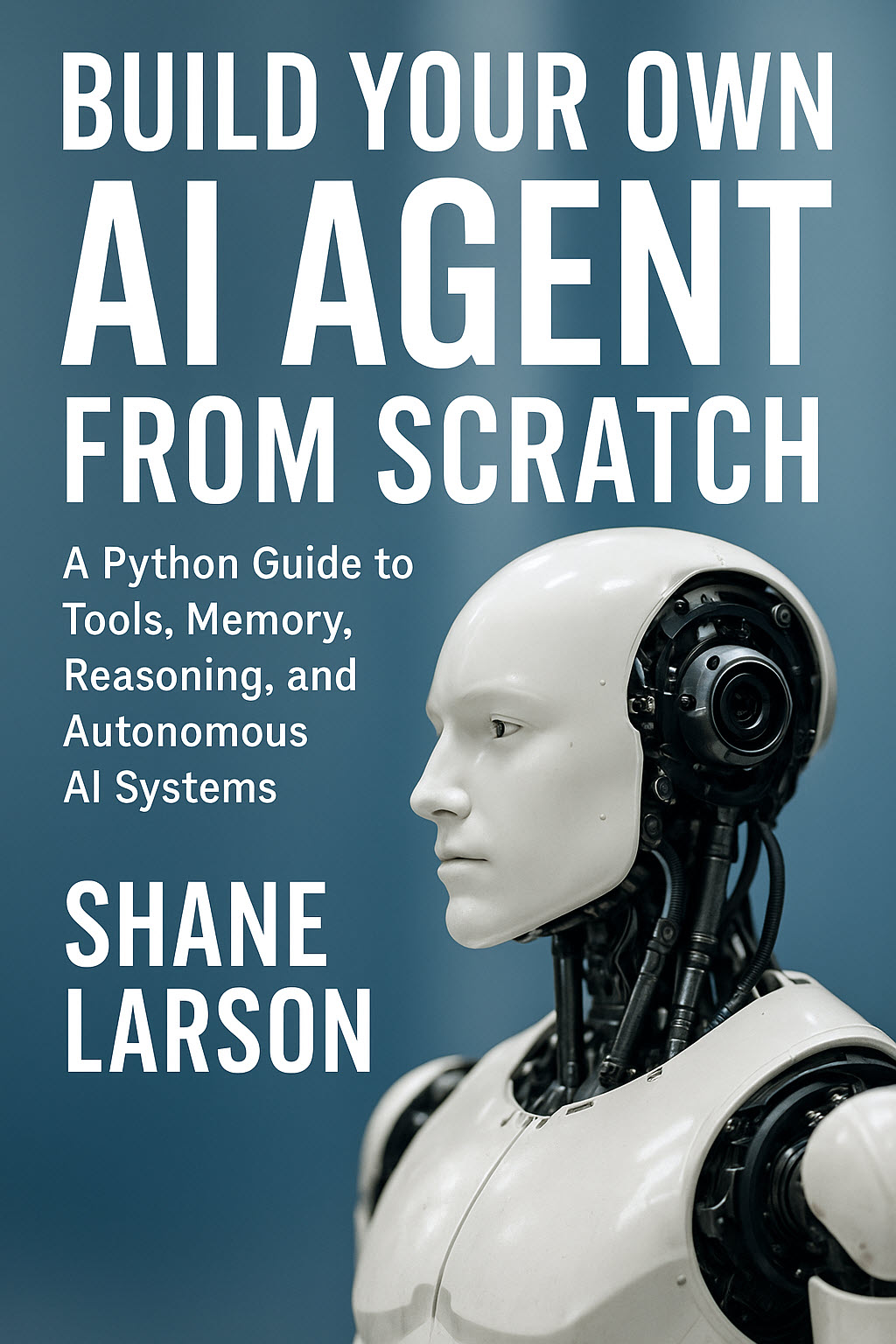
Build Your Own AI Agent From Scratch
Build a complete AI agent from scratch in Python — no frameworks, no hype. 16 chapters covering tools, memory, reasoning, MCP, multi-agent systems & more.
Learn MoreI've published roughly 80+ titles across multiple genres on Amazon KDP since 2023. The catalog spans AI and technology guides, ancient history (Bronze Age through Rome), a cybersecurity history series called Digital Outlaws, productivity books with an anti-hustle positioning, fiction (cyberpunk thrillers, eco-thrillers), and The Collapse Pattern Series: a 7-book (soon 8) analytical nonfiction series examining how systems self-destruct. Prices range from $0.99 to $9.99, all enrolled in Kindle Unlimited.
This is what a real AI-assisted publishing operation looks like. Not a spam farm. Not a content mill. A catalog built with editorial judgment at every decision point.
The Pipeline
The production pipeline is fully codified. Every book follows the same structured process:
Proposal. I write a detailed proposal defining the book's premise, target audience, differentiation from existing titles, chapter outline, and marketing angles. This is the most important document in the entire process. If the proposal is weak, nothing downstream can save it.
Outline. A detailed table of contents with chapter summaries, generated from the proposal. I review and restructure until the argument flow makes sense.
Chapter generation. Chapters are written in parallel using multiple AI agents, each targeting 3,000 to 4,000 words with specific content briefs. The briefs define what each chapter covers, what tone to use, what the reader should know by the end.
Manuscript assembly. Chapters get concatenated with structural elements: part headers, front matter, back matter. The manuscript is a single coherent document, not a pile of disconnected chapters.
Export. Automated Pandoc conversion to EPUB and DOCX. No more copying and pasting chapter by chapter into Word.
Publishing materials. Amazon description, categories, keywords, social media posts, launch checklist, KDP listing data: all generated in parallel with the manuscript.
Cover art. Three DALL-E cover variations generated via script. I pick the strongest and refine.
Upload. The EPUB goes directly to KDP. The listing data is structured for near-instant publishing.
The entire pipeline from proposal to ready-to-upload runs in a single session. I can dictate a book concept into my phone through Claude Code, walk away, and come back to a publish-ready manuscript. The quality has gotten remarkably good.
Where Human Judgment Lives
The "slop" critique is actually a critique of low-effort production, not AI involvement. Plenty of human-written books are slop. Plenty of AI-assisted books are excellent. The difference is whether a knowledgeable human made deliberate editorial decisions at every stage.
Here's where my judgment enters the process:
What to write. I choose topics based on market analysis, catalog gaps, audience demand, and personal expertise. The pipeline makes it trivially easy to write anything. Judgment determines what's worth writing.
Who it's for. Every book has a specific target reader defined in the proposal. "Everyone" is not an audience. "Software engineers evaluating whether to go independent" is an audience.
How it's structured. I design the outline, the chapter flow, the argument structure. AI doesn't decide how to sequence a seven-book series examining civilizational collapse patterns. I do.
Voice and tone. I set specific guidelines: direct, anti-hype, respects reader intelligence. These get enforced across every chapter.
Quality gates. I review output for accuracy, coherence, and whether it actually delivers value to the reader. If a chapter is thin or repetitive, it gets rewritten.
What NOT to write. I kill ideas that don't pass validation. This might be the most important judgment call. Just because you can publish something doesn't mean you should.
The AI never decides what to publish. I do.
The Quality Evolution
I'll be honest about this: the early books in the catalog were weaker. Some of the personal finance and early history titles were produced with less rigorous processes, and it shows. Shorter chapters, thinner arguments, less distinctive voice.
The tools were part of the problem. The early workflow involved copying and pasting chapter by chapter into Word documents, a process that took hours and introduced errors. But the bigger issue was that I hadn't yet built the discipline around proposals, content briefs, and quality gates that the current pipeline demands.
The evolution was specific and deliberate:
- Chapter length targets went from 2,000 to 2,500 words up to 3,000 to 4,000 words
- Content briefs went from vague topic descriptions to detailed specifications for each chapter's argument, evidence, and takeaways
- Parallel agent generation replaced sequential chapter writing, improving consistency across the manuscript
- A formal proposal process now forces me to articulate the book's value proposition before any content gets generated
The quality of the output is directly proportional to the quality of the input. Garbage in, garbage out applies to AI-assisted publishing exactly as it applies to everything else.
The Audiobook Layer
The catalog includes roughly 70 audiobook versions. Amazon's Kindle platform now allows automated conversion to audio for publishing on Audible. I've also used ACX for some titles with human narrators. The combination of AI-generated text and automated audio production means a single title can exist as an ebook, a print book, and an audiobook without the traditional production costs of each format.
The Economics
The business model is straightforward: Kindle ebooks and Kindle Unlimited page reads, priced between $0.99 and $9.99, plus affiliate marketing. The economics work because AI dramatically reduces production costs while maintaining quality. I'm not competing with traditionally published authors on per-book revenue. I'm competing on catalog breadth, publishing velocity, and the ability to serve niche audiences that traditional publishers won't touch.
A seven-book analytical nonfiction series about civilizational collapse is not something a Big Five publisher would greenlight. The audience exists, but it's too small and too niche for traditional publishing economics. AI-assisted production makes it viable because the cost structure is fundamentally different.
You can check out The Collapse Pattern Series on Amazon if you want to see what this looks like in practice.
What the Critics Get Wrong
The "AI content is slop" crowd makes a category error. They see the flood of low-effort AI spam on Medium, on Amazon, on content farms, and they conclude that AI involvement equals low quality. That's like watching someone use Photoshop to make a bad meme and concluding that Photoshop can't produce professional design.
The real question is not "was AI involved?" The real question is: did a knowledgeable human make deliberate editorial decisions at every stage? Did someone decide what's worth writing, for whom, at what depth, in what voice? Did someone evaluate whether the output is accurate, useful, and well-structured?
If yes, it's a tool-assisted creative product. If no, it's slop. The tool is irrelevant.
I started with crude workflows and produced books I'm not entirely proud of. I evolved the process, built better tooling, enforced higher standards, and now I produce books that deliver genuine value to readers. That trajectory is not unique to AI. It's the trajectory of any craft. You get better by doing the work, examining your failures, and raising your standards.
The difference is that AI lets you iterate at a pace that would be impossible otherwise. Three books in one sitting is not a flex. It's the result of a refined pipeline, clear editorial standards, and the willingness to invest the judgment that the tools can't provide.