How We Built an AI-Powered Cuneiform Translator (and Why a Book Publisher Did It)
We built an AI tool that translates cuneiform tablets from a single photo in about fifteen seconds. Here is how and why a book publisher made it.
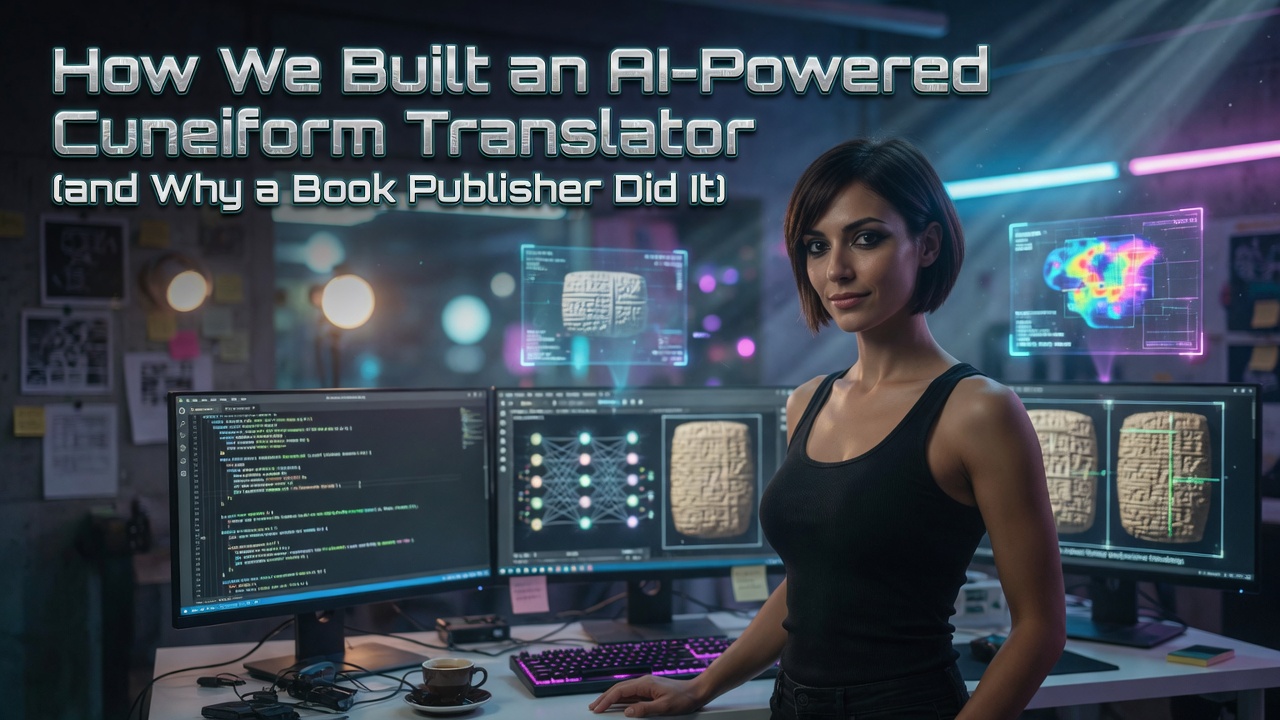
It is a surprisingly hard question to answer. Cuneiform, the wedge-shaped writing system invented by the Sumerians around 3400 BCE, was used across Mesopotamia for over three thousand years. Hundreds of thousands of tablets survive in museums around the world. Most remain untranslated. Until recently, the only way to read one was to spend years studying Assyriology.
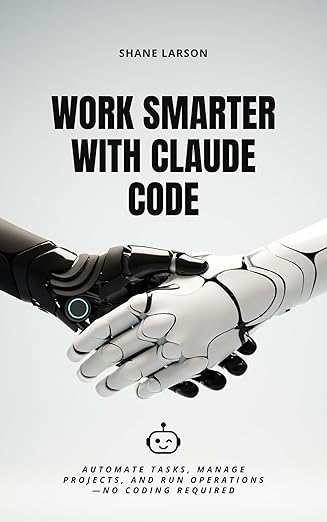
Work Smarter with Claude Code: Automate Tasks, Manage Projects, and Run Operations—No Coding Required
AI that sees your files and does the work. Organize chaos, automate tasks, escape spreadsheet hell. No coding required. Practical guide for knowledge workers.
Learn MoreWe decided to change that.
Why a Book Publisher Built a Translation Tool
Peak Grizzly Publishing has a deep catalog of ancient history titles covering Egypt, Mesopotamia, Assyria, the Bronze Age collapse, and more. We are not a tech company. We are obsessed with making the ancient world accessible, and when we saw what modern AI could do with image analysis, the idea clicked.
What if anyone could photograph a cuneiform tablet and get an instant translation?
Not a scholarly, peer-reviewed transliteration, but a solid, honest attempt that tells you what you are looking at, what it says, and why it matters. A tool that turns a museum visit from "that's interesting, I guess" into "I just read a 3,000-year-old tax receipt and it's weirdly relatable."
How It Works
The tool is deceptively simple from the user's perspective. Upload a photo. Wait about fifteen seconds while the AI "consults the scribes." Get back a transliteration, an English translation, historical context, and a confidence rating.
Under the hood, we are using Anthropic's Claude API with its vision capability. We send the tablet photo along with a carefully crafted system prompt that instructs Claude to act as an expert Assyriologist. The prompt asks it to identify the script type, provide a complete transliteration into Latin characters, translate the full text into English, and add historical context.
The key word is complete. Early versions tended to summarize long tablets into a few sentences. We had to explicitly tell the model: "Do NOT summarize. Translate every line." Once we did that, the results got dramatically better. This is the kind of prompt engineering lesson that sounds obvious in retrospect and is easy to miss when you are in the weeds.
We also built in honesty. Every result comes with a confidence rating (high, medium, or low) and any caveats about image quality or damaged sections. The tool does not pretend to be perfect. It tells you when it is guessing, and that transparency matters when the output is something a user might actually quote.
What Surprised Us
The biggest surprise was how well it handles famous tablets. Feed it the Flood Tablet from the Epic of Gilgamesh and it produces a remarkably coherent translation. The Code of Hammurabi? It identifies the script, nails the period, and returns the legal provisions in plain English. Even the Cyrus Cylinder, a Persian royal decree in Akkadian cuneiform, comes back with solid results.
The second surprise was how shareable the output is. People genuinely want to show others what they just translated. So we added the ability to save a translation to a permanent URL that anyone can visit. A gallery of community translations is already growing, which was not in the original spec. That emergent behavior is a useful signal: when users start sharing unprompted, the product has hit something real.
The Practical Details
The tool runs on our existing Next.js and PostgreSQL stack. The Claude API call costs pennies per image translation, which makes the economics trivial even at reasonable scale. We rate-limit at ten translations per hour per visitor to prevent abuse, and at current usage that has not been an issue.
Every translation page links back to our ancient history book catalog. It is not a hard sell, just a "want to go deeper?" section with relevant titles. The tool brings people in. The books give them somewhere to go next.
What's Next
We are watching the translation gallery closely. If it keeps growing, we may curate a collection of the most interesting community submissions, a crowd-sourced museum of translated tablets. We are also exploring whether accuracy improves for specific scripts by combining Claude's general knowledge with specialized cuneiform datasets.
The larger lesson is simple. We are a book publisher. We had no business building a translation tool. But AI has collapsed the distance between "somebody should build this" and "we can build this in a weekend." When you see an idea that fits your audience and the tech is suddenly within reach, you build it. That is the whole game now.
Try it yourself at peakgrizzly.com/tools/cuneiform-translator.