From Tech Burnout to Alaskan Adventures: Rethinking Work-Life Balance with Agentic Workflows
I'm writing this from a cabin in Alaska.
I'm writing this from a cabin in Alaska.
Outside the window there's about eight feet of snow and a sky that's been doing something genuinely absurd with light for the past hour. Later I'll probably go for a snowshoe. This morning I shipped a feature for a client, wrote part of this article, and had coffee while watching what I'm pretty sure was a moose walk through the tree line.
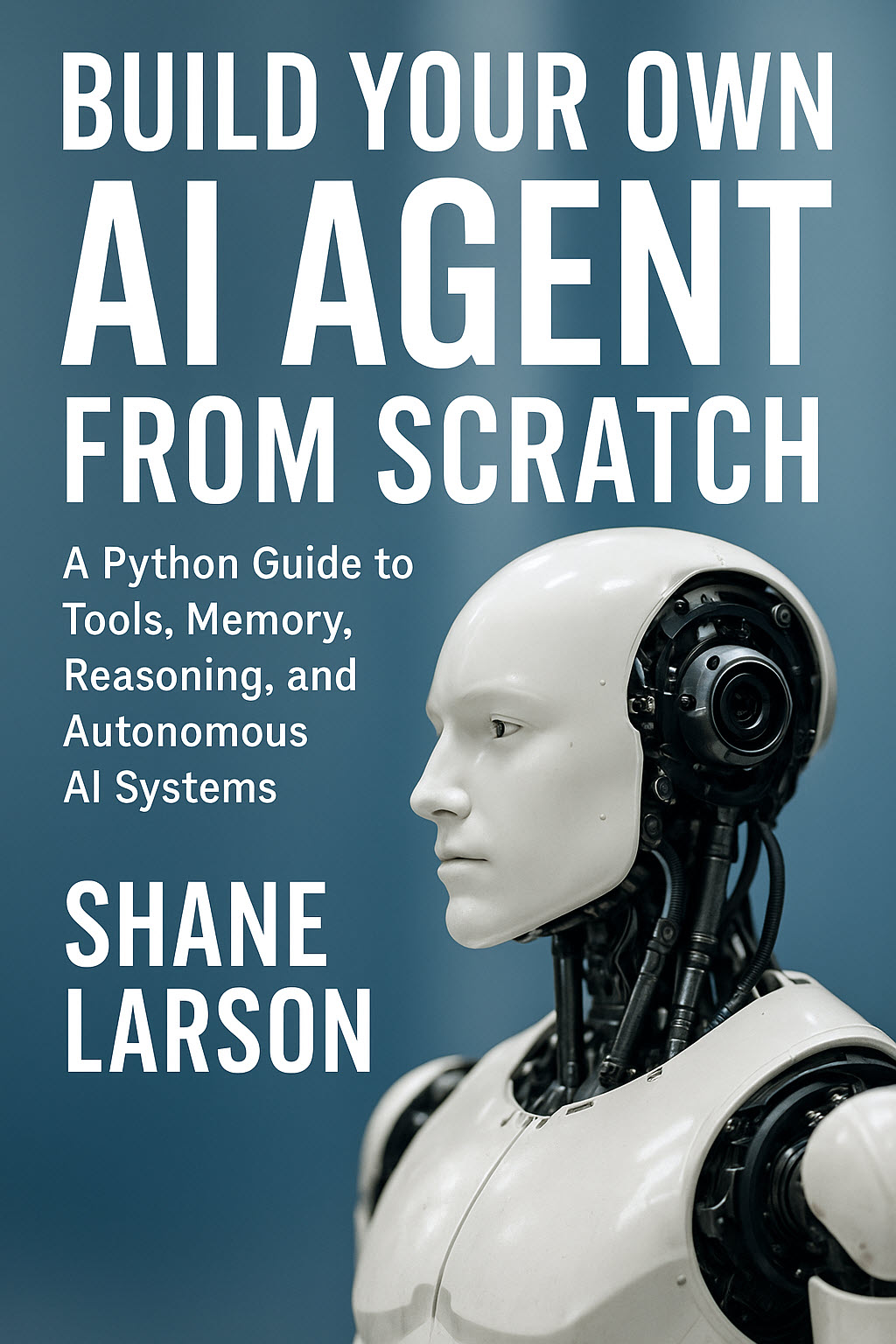
Build Your Own AI Agent From Scratch
Build a complete AI agent from scratch in Python — no frameworks, no hype. 16 chapters covering tools, memory, reasoning, MCP, multi-agent systems & more.
Learn MoreI'm not telling you this to brag. I'm telling you this because two years ago I was burning out in a way that felt structural — like the problem wasn't my specific job but the entire shape of how I was working. Nights and weekends consumed by context that wouldn't let go. That particular flavor of exhausted where you're technically off the clock but mentally you never leave.
The shift wasn't a sabbatical or a new hobby or a better morning routine. It was a fundamental change in how I build software — and specifically, the adoption of agentic AI workflows that gave me back time I didn't realize I could reclaim.
What Burnout in Software Actually Looks Like
There's a version of burnout that's dramatic and obvious. That's not what most experienced engineers experience. What I see more often — and what I felt — is a slow erosion of the parts of the job that used to be interesting.
The work that survives over a long career tends to be the boring parts. The novel problems get automated, delegated, or solved once and documented. What's left is the repetitive scaffolding: the boilerplate, the status updates, the configuration management, the documentation nobody reads, the context-switching between twelve partially-related things simultaneously.
You don't wake up one day hating your job. You wake up one day realizing you haven't actually enjoyed any of it in a while, and you can't quite remember when that changed.
Agentic tools didn't fix everything. But they did something important: they systematically attacked the parts of the work that were draining energy without producing anything interesting.
What "Agentic" Actually Means in Practice
Agentic AI development — using tools like Claude Code, Cursor, or similar — is meaningfully different from autocomplete-style AI assistance.
The difference: instead of suggesting the next line of code, an agentic tool can take a goal and figure out the steps to achieve it. It can read your codebase, understand the context, write the implementation, create the tests, update the documentation, and report back what it did.
This matters for burnout because the tasks that drain experienced engineers most aren't usually the hard problems. They're the medium-difficulty, time-consuming, uninteresting problems. The ones where you know exactly what needs to happen and you're just grinding through the execution.
Recent example from my own work: A client had a complex data migration that needed to happen across several related tables with specific transformation logic, audit logging, and rollback capability. This is the kind of task I've done many times. I know how to do it. It's not intellectually interesting and it's going to take most of a day.
With Claude Code, I described the migration requirements, the schema, the transformation rules, and the audit requirements. It produced a working migration script with tests and documentation in about 45 minutes. I reviewed it (critical — experienced developers should always review AI-generated code), made a handful of adjustments, and it was done.
That's not a few hours saved. That's a different relationship with the work entirely.
The Google Workspace CLI and Why Developer Tooling Matters
One of the things I've been experimenting with recently is the gws CLI — Google's command-line tool for Workspace management. It's a good example of a broader trend that matters for agentic workflows: the tooling ecosystem is catching up to the aspiration.
For engineers running any kind of operation that touches Google Workspace — email, calendar, Drive, Docs — having CLI access means you can script and automate workflows that previously required clicking through UIs. Combined with AI assistance for building the automation logic, this is genuinely powerful.
The specific workflows that have had the most impact on my day-to-day:
Automated status reporting — Scripts that pull data from multiple sources and compile into reports that previously would have required manual aggregation. I used to spend time every week doing this kind of work. Now it runs on a schedule.
Calendar and communication management — Automating the scheduling and coordination overhead that accumulates around any technical project. It's not glamorous, but it compounds. Every hour you don't spend on coordination overhead is an hour available for something more valuable.
Documentation generation — Arguably the highest-leverage application. I have Claude Code configured to generate documentation as part of the workflow for significant features, not as an afterthought. The documentation actually exists now, which is a minor miracle.
Designing Your Work for Sustainability
The agentic tools don't work passively. Getting them to actually reduce your workload requires deliberate design of how you work. A few principles I've landed on:
Separate the thinking from the doing
The highest-value thing experienced engineers contribute is judgment. Architectural decisions, tradeoff evaluation, problem decomposition, quality assessment. These are hard to automate and they're where your experience actually matters.
The implementation — the "doing" — is increasingly something you can delegate to an AI agent while you focus on the next thinking task.
This sounds simple, but it requires actually resisting the habit of doing it yourself. Experienced engineers often find it faster to just write the thing than to spec it out for an AI. That's often true for individual tasks. It's false at scale, because the doing accumulates indefinitely and the thinking compounds.
Automate the administrative overhead ruthlessly
Status updates. Meeting prep. Documentation maintenance. These tasks have high regularity and low intellectual content. They're also disproportionately represented in how burned-out engineers describe their days.
Every administrative task you can systematize and automate is cognitive space returned to you.
Protect the time that isn't work
Alaska makes this easier. When you live somewhere with actual wilderness accessible from your back door, not using it feels like a specific kind of waste.
But the mechanism applies anywhere. The reason agentic tools matter for work-life balance isn't that they make work more efficient — it's that they make it easier to actually stop working. When the tedious work is handled by automation, there's less of that lingering "I should go back and finish that thing" feeling that turns evenings into half-work limbo.
The Job Board I Built for People Feeling What I Felt
One of the things I noticed over the past few years was that articles about burnout and career alternatives for software engineers consistently got more engagement than anything else I wrote at Grizzly Peak Software.
So I built something around it: a job board specifically for engineers exploring alternatives. Developer Relations, Technical Writing, Solutions Engineering, Technical Product Management — roles that use engineering background and judgment without requiring a return to the full-time grind of production software development.
It runs on automated job ingestion from multiple feeds, AI-powered curation to surface the most relevant roles, and scoring for burnout-friendly signals like remote work availability and known work-life balance indicators. I built it in a weekend using the same agentic tools I described above.
The irony is not lost on me: I used AI to reduce my own burnout risk, and then used those same tools to build a resource for other engineers trying to find their way out of the same situation.
What I'd Tell Someone Currently In It
If you're in the burned-out phase right now, there are a few things worth considering:
The tedium is the problem, not the complexity. If you loved the hard problems and you've stopped loving the work, look at what your days actually consist of. It's usually not the hard problems. It's everything around them.
Tooling investment pays back faster than you expect. I resisted the early agentic tools because they felt immature. They were, for a while. The current generation is genuinely different. The time you spend learning to work effectively with AI assistance will return itself many times over.
Location is not the answer, but it helps. Moving to Alaska didn't fix my relationship with work. But having a reason to actually stop working — trails that close, weather that requires planning, seasons that don't wait — created external accountability for something I was bad at regulating internally.
The alternative careers exist and they're good. If what you want is to leave engineering entirely or shift into something adjacent, there are real options that don't require starting over. The technical judgment you've built over a career is valuable in more contexts than most engineers realize.
The Moose Just Came Back
I'm going to wrap this up and go outside.
That's the actual point of all of this: having work that functions well enough that the rest of life gets to be real. Not a recovery period between sprints. Not something you have to earn by suffering through enough unbillable hours.
Agentic AI workflows, good tooling, and deliberate attention to what's actually draining versus energizing have collectively made my work sustainable in a way it wasn't for most of my career. The cabin is part of it. The workflows make the cabin possible.
Build toward the life you want to have, then build the workflows that support it. They're the same project.
Shane is the founder of Grizzly Peak Software. He writes about AI-powered development, technical career paths, and building software from a cabin in Caswell Lakes, Alaska.