From Enterprise Architect to Indie Hacker: The Real Transition
I spent eighteen years building systems for companies with names you'd recognize. Fortune 500 companies with six-figure infrastructure budgets, compliance...
I spent eighteen years building systems for companies with names you'd recognize. Fortune 500 companies with six-figure infrastructure budgets, compliance teams bigger than most startups, and architecture review boards that met monthly to debate whether we should upgrade from Java 8 to Java 11.
Then I walked away from all of it to build my own products, charge my own prices, and figure out everything I didn't know about actually running a business. The transition was not the triumphant "follow your dreams" story that Medium articles make it sound like. It was humbling, expensive, and the best decision I've made in my career.
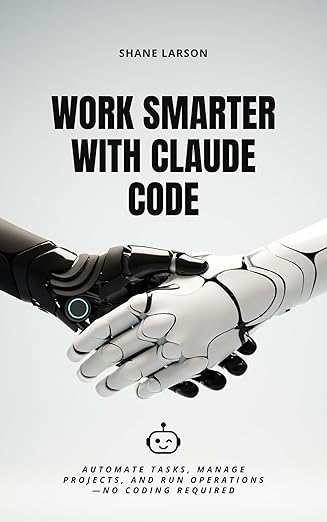
Work Smarter with Claude Code: Automate Tasks, Manage Projects, and Run Operations—No Coding Required
AI that sees your files and does the work. Organize chaos, automate tasks, escape spreadsheet hell. No coding required. Practical guide for knowledge workers.
Learn MoreThis is what the transition actually looks like from the inside.
What Enterprise Architecture Really Teaches You
Before I get into what I left behind, I want to be honest about what those eighteen years gave me. The enterprise world gets mocked a lot in indie hacker circles, and some of that mockery is earned. But the skills you build in enterprise environments are real, and some of them translate directly.
Systems thinking. When you've designed systems that handle millions of transactions per day, you develop an intuition for where things break under load, where data gets inconsistent, and where latency hides. That intuition doesn't go away when you're building a SaaS tool with fifty users. It means your small tools are overbuilt in ways that pay off later.
Failure planning. Enterprise systems teach you to think about failure before it happens. What if this database goes down? What if this API returns garbage? What if traffic spikes 10x? Indie hackers often learn these lessons the hard way. Enterprise veterans learned them on someone else's dime.
Communication across organizational boundaries. Explaining technical trade-offs to a VP who doesn't know what a REST API is — that skill translates directly to writing marketing copy, talking to customers, and explaining your product to investors. If you can survive an architecture review with a room full of stakeholders who have conflicting priorities, you can handle a sales call.
What enterprise does not teach you is how to build something small, ship it fast, and find out if anyone cares. That's the gap, and it's wider than I expected.
The Skills That Don't Transfer
Here's where the humility starts.
Scope Calibration
In enterprise, the default project size is large. You think in terms of quarters, teams, and dependencies. When I started building my own products, my first instinct was to plan the full system — the API, the admin dashboard, the user management system, the analytics pipeline, the CI/CD setup, the monitoring stack.
My first indie project took four months to build and had three users. Two of them were me testing from different browsers.
The indie hacker skill that I lacked entirely was the ability to build the smallest possible thing and get it in front of people before investing more time. Enterprise architects don't build MVPs. They build architectures for systems that hundreds of developers will work on for years. The muscle memory is completely wrong for indie projects.
I had to consciously retrain myself to stop asking "what's the right architecture?" and start asking "what's the fastest way to find out if anyone wants this?"
Pricing and Revenue
In eighteen years of enterprise work, I never once had to think about pricing. The company had a product, the product had a price, someone in sales or product management decided what that price was, and I built the systems that delivered it.
When I launched my first paid product, I had no idea what to charge. I looked at competitors, picked a number that felt reasonable, and immediately second-guessed it. Was it too high? Too low? Should I do monthly or annual? Should there be a free tier?
I undercharged on everything for the first year. Not because I was being strategic about it — I was just uncomfortable charging money for something I built. After thirty years of trading hours for a salary, the idea that I could set my own price and people would pay it felt presumptuous.
The thing nobody tells you is that pricing is a skill, and like any skill, you develop it through practice and failure. I've changed the pricing on my products multiple times. The prices have always gone up.
Marketing
I don't mean I was bad at marketing. I mean I had literally zero marketing skills. None. In enterprise, marketing is a department. In indie hacking, marketing is the thing that determines whether your product succeeds or dies in obscurity.
My first attempts at marketing were embarrassing. I posted on Reddit and got ignored. I tweeted about my product to my 200 followers. I wrote a blog post that nobody read. I was building things that I genuinely believed were useful, and I could not figure out why nobody was showing up to use them.
The lesson I eventually learned: building the product is maybe 30% of the work. Finding the people who need it, convincing them it exists, and making it easy for them to start using it — that's the other 70%. Enterprise architects spend 100% of their time on the 30%.
What I Wish I'd Known Before Leaving
The Income Gap Is Real
I left a senior architect role paying well into six figures. My indie products generated $340 in the first six months. That's not a typo. Three hundred and forty dollars.
If you're planning this transition, you need either savings (I had about eighteen months of runway), a spouse with a stable income (I have that too), or a plan to do freelance/consulting work while you build (which splits your focus but keeps you solvent).
The financial pressure is different from what I expected. It's not that I was worried about keeping the lights on — we had savings and my wife's income covered our basics. The pressure is psychological. After decades of getting a reliable paycheck, watching your bank account only go down while you're working harder than ever is genuinely stressful.
It took me about fourteen months before my indie products were generating enough revenue to feel like a real business rather than an expensive hobby.
You Will Miss the Team
Enterprise architecture is a team sport. I had peers to debate with, mentors to learn from, and junior engineers to teach. The intellectual stimulation of working on hard problems with smart people is addictive, and going solo means giving that up.
I replaced it partially with online communities, open source collaboration, and writing articles like this one. But it's not the same. If you're highly extroverted and draw energy from team interactions, solo indie hacking might not be for you. Or you might need to deliberately structure social interaction into your work life in ways that enterprise employees never have to think about.
Your First Product Will Probably Fail
Mine did. It was a developer tool for API documentation that I was convinced the market needed. I built it over four months, launched it, and discovered that the market had about a dozen tools doing approximately the same thing, most of them free or freemium with massive feature sets.
The product wasn't bad. The market research was nonexistent. In enterprise, someone else does market research. In indie hacking, that someone is you, and if you skip it, you'll build something nobody is willing to pay for.
My second product did better. My third one found a real niche. The pattern for me was that each attempt refined my understanding of what "a product people want" actually means, as opposed to "a product I think is interesting."
The Transition Playbook I'd Recommend
If I were doing this again, knowing what I know now, here's the approach I'd take.
Phase 1: Build in Public While Still Employed (3-6 months)
Start a project on the side. Not a massive one — something you can ship in a weekend or two. Put it out in the world. Write about it. Learn the basics of finding users before you're depending on it for income.
// The simplest possible SaaS backend
var express = require('express');
var app = express();

app.get('/', function(req, res) {
    res.send('Your product goes here. Ship it.');
});

app.post('/api/signup', function(req, res) {
    // Store the email. That's your first user.
    // Everything else can wait.
    console.log('New signup:', req.body.email);
    res.json({ success: true });
});

app.listen(3000);
The goal of Phase 1 isn't revenue. It's learning the mechanics of shipping, marketing, and supporting a product. You want to make your biggest mistakes while you still have a salary.
Phase 2: Build a Financial Runway (6-12 months)
Save aggressively. I'd recommend 12-18 months of living expenses. You'll need more runway than you think because the revenue ramp is slower than you expect.
Also during this phase, start building an audience. Write articles. Contribute to open source. Answer questions on Stack Overflow. Build a reputation in a specific niche. When you eventually launch a paid product, these people will be your first customers.
Phase 3: The Leap (Month 0)
Quit the job. Give proper notice. Leave on good terms — the enterprise world is smaller than you think, and former colleagues become consulting clients, customers, and referral sources.
On day one, resist the urge to spend three weeks setting up the perfect development environment, the perfect project management system, and the perfect daily schedule. Start building something and ship it within two weeks.
Phase 4: The Grind (Months 1-18)
This is the hard part. You're building products, learning marketing, handling support, managing finances, and doing everything else that an enterprise organization has entire departments for. You'll wear every hat and most of them won't fit.
Some weeks you'll ship a feature and get five new customers and feel invincible. Other weeks you'll get a support email from an angry user and a $0 revenue day and question every decision that led you here.
The thing that gets you through Phase 4 is the same thing that made you a good enterprise architect — the ability to solve problems systematically rather than emotionally. When something isn't working, diagnose it, identify the root cause, and fix it. Revenue is low? That's a marketing or pricing problem. Users aren't retaining? That's a product problem. You're burning out? That's a workload management problem.
Treat your business like a system. Debug it the same way you'd debug a distributed system — observe, hypothesize, test, iterate.
What's Actually Better on the Other Side
I've been doing this for a few years now, and the comparison to enterprise life is stark.
Speed. I can go from idea to deployed product in a day. No architecture review. No sprint planning. No waiting for DevOps to provision a server. The feedback loop between "I think this would work" and "let's find out" is hours instead of months.
Ownership. Every line of code I write, I own. Every customer I gain, I keep. Every dollar of revenue is the direct result of something I built and shipped. After decades of building systems that made other people wealthy, there's something profoundly satisfying about that.
Freedom. I set my own hours. I work from a cabin in Alaska. I take breaks when I want. I focus on what interests me. When a project bores me, I can pivot without requesting permission from a committee.
Learning velocity. I've learned more in three years as an indie hacker than in the last ten years of enterprise work. Marketing, sales, customer support, financial management, copywriting, SEO, product design — these were all blind spots, and I've had to develop at least basic competence in all of them.
Alignment. The most underrated benefit. In enterprise, you often spend your best creative energy building things that you don't care about for reasons that don't make sense to you. As an indie hacker, everything you build is something you chose to build. The alignment between your interests and your work is almost total.
What's Actually Worse
I'd be lying if I said everything is better.
Financial uncertainty. Even with products generating consistent revenue, the month-to-month variation is real. Enterprise paychecks are the same every two weeks. Indie revenue is not.
No safety net. No HR department, no benefits administrator, no IT helpdesk. When my laptop died, there was no corporate IT to ship me a replacement overnight. I drove to Anchorage and bought one.
Decision fatigue. When you make every decision — from the tech stack to the support email template to the color of the checkout button — the sheer volume of decisions is exhausting. In enterprise, most decisions are either made for you or made by committee. Both of those approaches have problems, but they do reduce individual cognitive load.
Loneliness. I mentioned this already, but it's worth repeating. Working alone is hard. It's especially hard when things aren't going well and you don't have colleagues to commiserate with.
The Enterprise Architect Advantage
Here's the thing that took me too long to realize: the enterprise background isn't a liability. It's a competitive advantage, if you learn to use it differently.
Most indie hackers are self-taught developers who are great at shipping fast but struggle with the problems that come with scale. Most enterprise architects are great at designing for scale but struggle with shipping fast. If you can learn to ship fast while retaining your enterprise-grade thinking about reliability, security, and data integrity, you have an edge that's hard to replicate.
My products don't go down because I over-engineer the infrastructure. My data doesn't get corrupted because I design schemas carefully. My APIs are documented because I spent years in environments where documentation was mandatory. These aren't liabilities. They're differentiators.
The trick is knowing when to apply the enterprise mindset and when to suppress it. Architecture review for a side project with zero users? Suppress it. Proper error handling and database backups for a product with paying customers? Apply it. The calibration takes time, but once you find it, the combination of enterprise rigor and indie speed is powerful.
Three Years Later
I make less money than I did as an enterprise architect. My hours are irregular. My stress comes from different sources. I sometimes miss the clarity of having a job description and a team and a clearly defined problem to solve.
But I wake up every morning excited to work on things I care about. I built products that real people use. I run my businesses from a cabin in Alaska surrounded by spruce trees and silence. And every piece of software I ship is mine — not a corporation's, not a client's, mine.
The transition from enterprise architect to indie hacker is not a promotion. It's a career change. The skills overlap but the context is completely different, and the learning curve is steep in areas you've never had to think about.
If you're considering it, go in with your eyes open. Save more money than you think you need. Ship something before you quit. Accept that your first product will probably fail. And understand that the enterprise career you're leaving gave you more useful skills than the indie hacker community typically gives it credit for.
You just have to learn which skills to keep and which habits to unlearn. That's the real transition.
Shane Larson is a software engineer, author, and the founder of Grizzly Peak Software. He spent eighteen years in enterprise architecture before making the leap to indie products. He writes about the journey at grizzlypeaksoftware.com.